How to Choose the Right Cricket Betting Tips for Your Goals
Before you place a single bet, decide what “success” means for you: maximizing expected value, finding safer markets, or targeting higher payout outcomes. A practical buyer-intent approach starts by matching your preferred risk level to the kind of bet you’re considering. For example, moneyline-style match winner Cricket betting tips markets can feel straightforward, while player props like top batsman or top bowler require deeper comfort with roles and matchup reasoning. When you understand your goal first, you can evaluate any guide on how well it supports that goal.
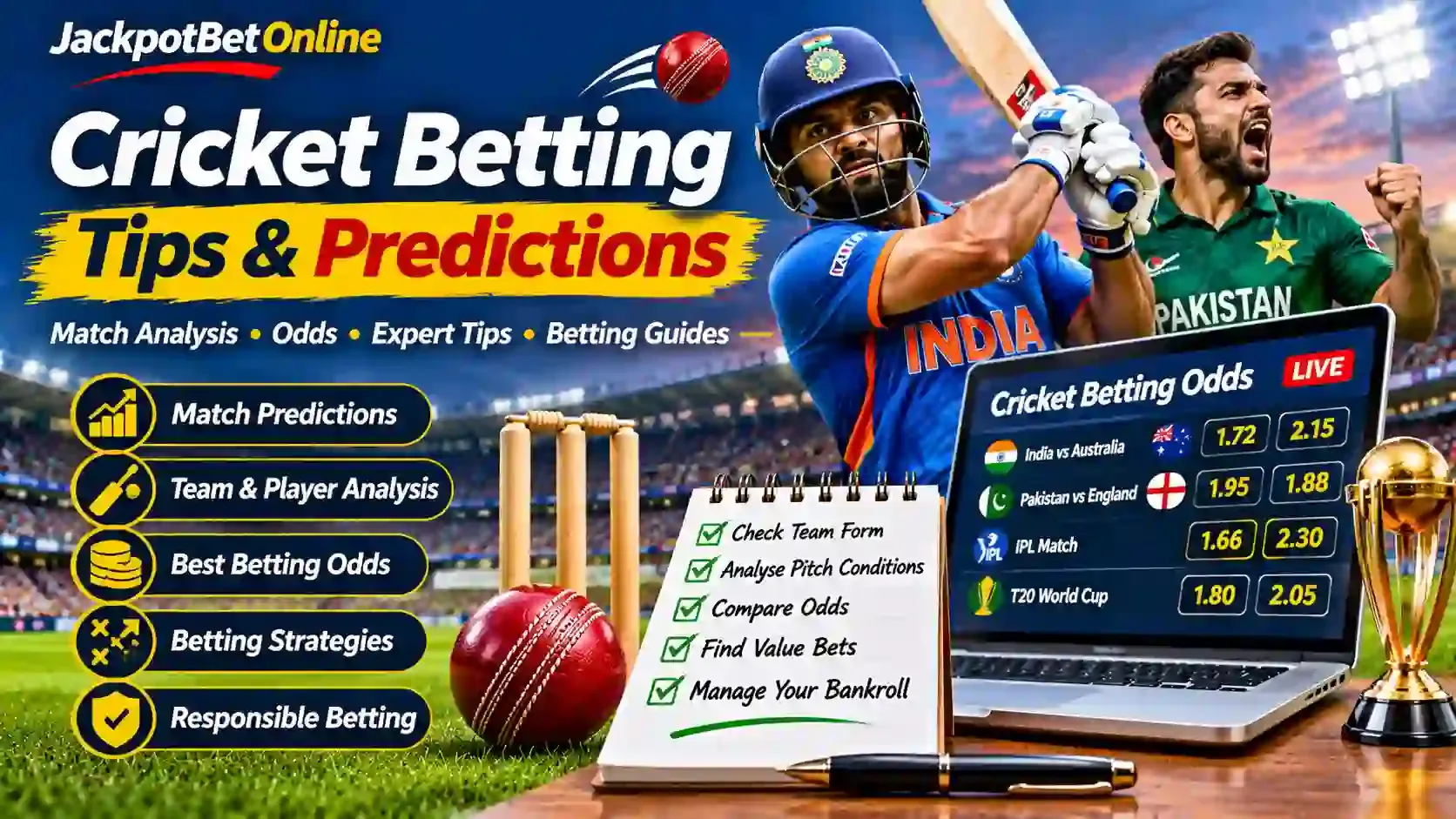
Next, look for guidance that clearly explains the inputs behind its recommendations, not just the picks. Good resources break down how they think about team form, batting depth, bowling variations, and recent workload changes in a way you can verify yourself. If a guide focuses only on results without explaining why a market is mispriced, it’s harder to trust. Use your checklist to confirm whether the article covers match context, market types, and responsible wagering—because those elements help you place smarter bets, not merely more frequent ones.
Market Mapping: From Match Winner to Live Overs
Cricket offers many betting angles, and the best guide should help you map each market to the information that matters most. For instance, match winner betting often depends on overall team balance, recent performance trends, and the availability of key players. Total runs and innings totals require a different lens, such as pitch behavior, boundary size expectations, and how aggressively teams usually start. When you understand what a market is actually asking you to predict, you can judge whether the guide’s reasoning fits the bet.
Live betting adds another layer, because the game state can change quickly as wickets fall, partnerships form, or bowlers get hit by form swings. A buyer-intent guide should explain what you’re looking for during the match, such as run-rate momentum, batting collapses, fielding impact, and over-by-over bowler effectiveness. It should also caution that live prices can move sharply, meaning your decision needs to account for timing and not only “who is better.” The strongest approach is using live betting to react to evidence, not to chase emotion.
What to Check Before You Bet: Form, Matchups, and Conditions
Start with team form in a way that separates “momentum” from “one-off results,” because small-sample streaks can mislead. Then examine head-to-head trends carefully, but treat them as supportive context rather than a rulebook. If the guide explains how styles clash—such as a pace-heavy bowling attack versus a batting lineup that struggles with swing—your analysis becomes more grounded.
Pitch and weather considerations are often the difference between a generic prediction and a useful one. A quality guide will discuss how surface conditions can favor pace or spin, how grass cover or dry patches can affect ball movement, and how dew can influence late-innings bowling. It should also highlight injuries, squad rotations, and batting order changes, since these directly affect the distribution of risk across overs. For example, if a key batter is promoted or if a regular bowler is returning from rest, the market may not fully price that uncertainty.
Player performance analysis should also be practical, not just statistical. Look for coverage of roles—opening batters facing the new ball, middle-order anchors managing risk, and death-overs bowlers who consistently execute yorkers and slower balls. A buyer-intent guide should encourage you to connect those roles to market behavior, such as why top batsman pricing reacts to batting position or why top bowler markets shift when a bowler’s overs are expected to be capped. When the guide teaches you how to interpret these connections, you can make better decisions even when the match is outside the examples.
Bankroll Management and Odds Thinking for Confident Decisions
Even the best analysis can’t remove variance in cricket, so responsible bankroll management is essential to staying in control. A good guide should explain how to set a betting budget, split it across different bet types, and avoid overexposure to a single match or tournament. It should also help you understand the difference between placing a bet and building a repeatable process. If your strategy depends on constant large stakes, you’re likely to experience rapid drawdowns when outcomes swing.
Odds evaluation is another buyer-intent requirement, because value doesn’t appear from predictions alone. Look for guidance on comparing prices across bookmakers, identifying when a market has been shaded by public sentiment, and understanding how implied probability relates to your own assessment. If a guide teaches you how to ask, “Is the price fair for the risk?”, you gain a framework that improves over time. It should also remind you that no statistical model guarantees profits, so your decisions must include discipline, not hope.
Finally, good resources emphasize responsible gambling practices and transparent expectations. A buyer-intent article should encourage readers to bet within their limits, avoid chasing losses, and treat losses as part of long-term variance. It should also discuss how to review outcomes after the match to learn from errors, such as overvaluing form streaks or ignoring pitch changes. When you combine odds thinking with review habits, you transform cricket betting from a gamble into a skill-building routine.
Conclusion
Start with your betting goal, then match the market you want to bet with the information that genuinely influences it. Use form, matchup thinking, pitch and weather checks, and injury/squad updates to reduce uncertainty before you spend your bankroll. When you approach betting this way, every guide becomes easier to evaluate and every wager becomes a clearer decision. For the most benefit, prioritize educational analysis that explains the reasoning behind markets like totals, innings outcomes, player props, and live betting opportunities. Also make sure any recommendations include responsibility, because cricket’s natural randomness means no guide can guarantee consistent results. With disciplined bankroll management and value-focused odds thinking, you can participate more confidently while respecting the risks involved. If you want informative match previews and structured guides, use resources like Jackpot Bet Online as a starting point for learning and improvement.